Understanding Accessibility and Inclusion within the Built Environment: Beyond Green Building Rating Tools
For whom does designing environmentally sustainable buildings benefit?
Green building rating tools were born from growing concern over the environmental impacts of the building industry, which can be traced back to concerns over climate change. Climate change itself is recognised to adversely affect the human population on a global scale. Thus, since the inception of certification frameworks such as BREEAM and LEED, current acknowledged rating tools have been refined to address green building practices that encompass the trifecta of sustainability: The Triple Bottom Line. This framework comprises the social, environmental, and economic dimensions, often referred to as People, Planet, and Profit.
Still, these dimensions have been historically addressed with differing levels of priority. Both within and outside of rating tool frameworks, green building practices initially focused on energy and water efficiency. Such measures directly address the Planet—by reducing resource consumption for energy and water demands— and translate directly to Profit through reduced utility bills. This clear path towards the economic bottom line was strategic in influencing the building industry stakeholders at the time to accept and move forward with green building practices. Meanwhile, in examining early versions of rating tools, concerns over the social bottom line started from whether there was enough daylight and ventilation, out of notions to improve building user productivity. Over time, the requirements became more comprehensive, now encompassing the users’ health, comfort, and well-being.
As part of the wider realm of sustainability practices in the building industry, exactly how the rating tools address user wellbeing varies. Outside of these tools, how policies and conventional practices have been exercised would reveal that the social aspect of sustainability requires vast improvements still, if we examine people other than the typical able-bodied Western man. Thus, do sustainable buildings actually benefit everyone?
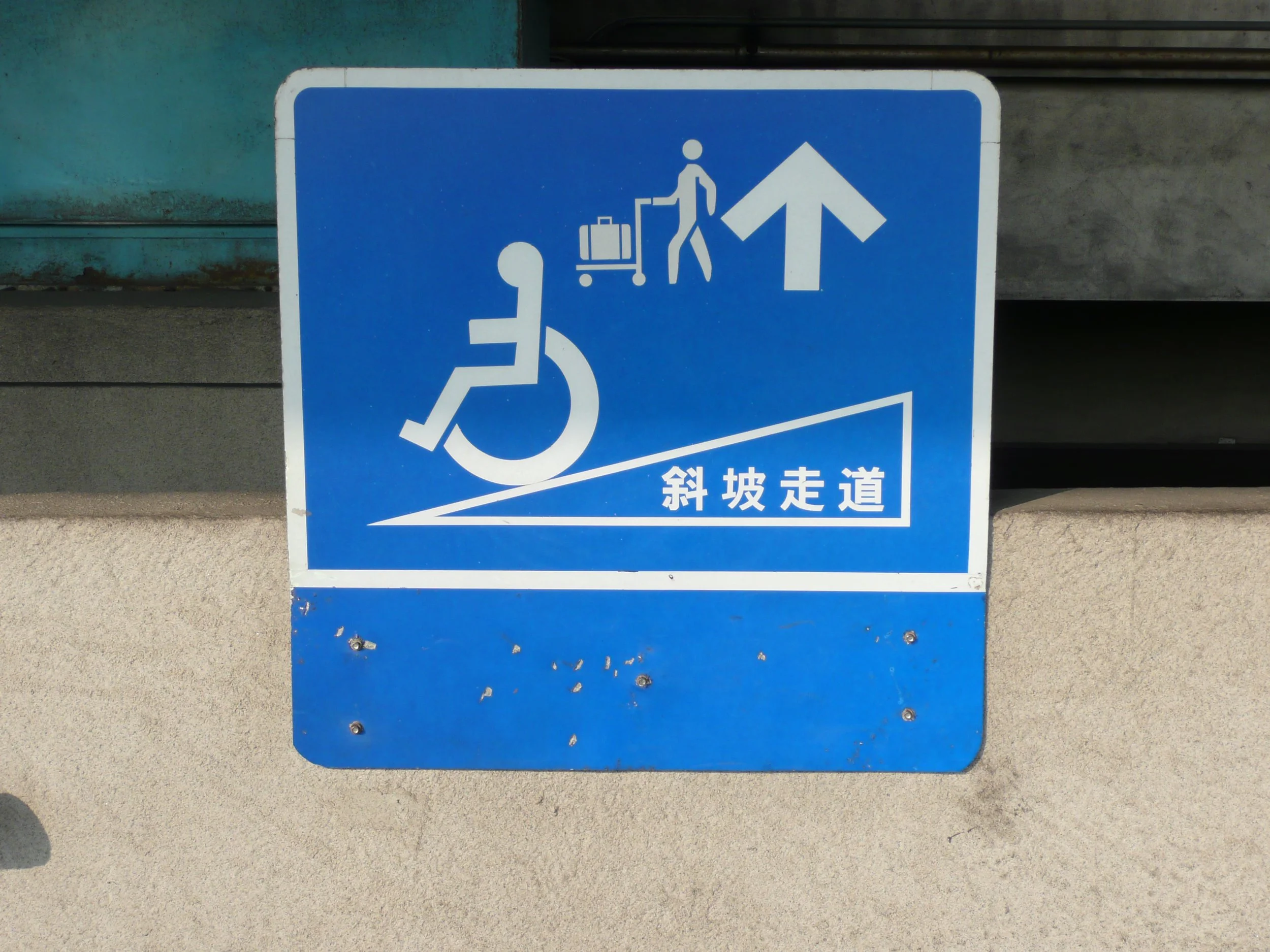
Accessibility in the built environment
The accessibility of a building is determined by whether people of differing disabilities are able to use it. In this sense, the term ‘using’ a building should encompass everything from locating the building to entering it, navigating indoors, using its facilities, and exiting the building. To locate a building, accessibility features range from audio support near the building site to Braille signage and tactile paving. These are features that address different disabilities, such as hearing and visual impairments, and for outdoor navigation specifically, may not always be feasible to implement in the context of owners aiming to certify their projects. Several rating tools reward projects for implementing accessibility features, such as the Earthcheck Building Planning and Design Standard (BPDS), listing up to four criteria that award points for access to project facilities, inclusive navigation, and the creation of recreational spaces for all (Earthcheck, 2024). Great care must be taken to implement these accessibility features, as simply placing them in projects without the proper consideration of their intended users will only backfire on the users’ experience. Even for health and fitness facilities, there is not enough variety in the disabilities addressed through the buildings’ features (Carlsson et al., 2021). A New Zealand study showed that more aware building designs would commonly accommodate for mobility impairments, yet rarely for visual, hearing, or other disabilities (Flemmer and McIntosh, 2025). In fact, inclusive design in the built environment may present finer challenges than the ramps and wheelchair lifts suggest. For rooms with carpets, wheelchair users may move with greater difficulty due to the wheels sticking easily to carpet, highlighting the importance of involving the perspective of disabled building users in the design and development process (Imrie and Kumar, 1998).
The gap in awareness from building practitioners still persists (Flemmer and McIntosh, 2025), though the refinement of rating tools to include more accessibility and inclusion requirements may suggest a gradual shift in the paradigm. In its most recent update, LEED v5 places ‘Quality of Life’ as one of its three impact categories (USGBC1, n.d.). Requirements for accessible outdoor areas emphasise the focus on people with limited mobility (USGBC2, n.d.). In the credit ‘Accessibility and Inclusion,’ LEED lists a range of inclusive design strategies such as non-slip flooring, tactile signage, and the requirement to follow local accessibility codes (USGBC3, n.d.). In its pursuit to accommodate and enhance human health and wellbeing, the WELL v2 rating tool states in its ‘Equity’ principle that it aims to benefit “especially disadvantaged or vulnerable populations” (WELL, 2025).
To listen to those with first-hand experience
It is important to remember that a design technique and technology-first approach to accessibility, reminiscent of the universal design concept, is not enough to properly address the actual needs of disabled people (Imrie, 2012). Marmot and Ucci (2015) concluded that in considering the reduced physical activity levels of users with limited mobility, the act of removing or adding design elements rarely promotes the intended increase in physical activity. Thus, a key strategy for practitioners to consider is to involve disabled people in the design and development process, such that the resulting building accurately meets their needs. Expanding on this, accessible design must ideally account for socio-cultural and even political contexts, as these are closely entwined with the issue of access (Imrie, 2012). Of cautious note is that discrimination against disabled people may persist even within accessible built environments, and may also occur with different intensities affected by economic background, gender, and race, among other things; an intersectional lens is useful to address these multiple inequalities (Kaijser and Kronsell, 2014; Mikulewicz et al., 2023).
Conclusion
The development of rating tools, research, and the refining of policies and regulations on sustainability mark the continuous march towards securing climate resilience. While many rating tools have since included user health and well-being, no such achievement of climate resilience is possible without properly addressing the people actually experiencing climate change.
Climate resilience must include everyone. This means the actions we take to further climate resilience and sustainable living cannot focus on the upper percentage of building industry movers alone, not when policies surrounding climate change, as motioned by governments globally, disproportionately affect people across socioeconomic layers, while also being affected by other non-exhaustive factors, such as location, access to resources, gender, and disabilities. A sustainable future is possible only by considering those marginalised by the building industry’s policies, practices, and business decisions. This is a growing movement within the green building and sustainability world, and can be seen in the involvement of accessibility and inclusion as rating tool criteria, with varying degrees of application. The lived experiences of vulnerable groups and communities are the very point practitioners and policymakers should improve on as the building industry continues to develop.
References
Accessible Outdoor Space (n.d.). USGBC2. Available at: https://www.usgbc.org/credits/new-construction-core-and-shell/v5/ssc?return=/credits/New%20
Accessibility and Inclusion (n.d.). USGBC3. Available at: https://www.usgbc.org/credits/new-construction-core-and-shell/v5/eqc3?return=/credits/New%20Construction/v5
Carlsson, G. et al. (2021). A scoping review of public building accessibility, Disability and Health Journal, 15:2022, np., doi: 10.1016/j.dhjo.2021.101227
EarthCheck Building Planning and Design Standard (BPDS) - Version 5 (2024). EarthCheck.
Flemmer, C. and McIntosh, A. (2025). Equitable Access to the Built Environment for People with Disability, Athens Journal of Technology & Engineering, 12:2025, pp. 1-14, doi: 10.30958/ajte.X-Y-Z
Imrie, R. (2012). Universalism, universal design and equitable access to the built environment, Disability & Rehabilitation, 2012:34(10), pp. 873-882, doi: 10.3109/09638288.2011.624250
Imrie, R. and Kumar, M. (1998). Focusing on Disability and Access in the Built Environment, Disability & Society, 13:3, pp. 357-374, DOI: 10.1080/09687599826687
Kaijser, A. and Kronsell, A. (2014). Climate change through the lens of intersectionality, Environmental Politics, 23:3, pp. 417-433, DOI: 10.1080/09644016.2013.835203
LEED v5 (n.d.). USGBC1. Available at: https://www.usgbc.org/leed/v5
Mikulewicz, M. et al. (2023). Intersectionality & Climate Justice: A call for synergy in climate change scholarship, Environmental Politics, 32:7, pp. 1275-1286, DOI: 10.1080/09644016.2023.2172869
Marmot, A. and Ucci, M. (2015). Sitting less, moving more: the indoor built environment as a tool for change, Building Research & Information, 43:5, pp. 561-565, DOI: 10.1080/09613218.2015.1069081
WELL v2 (2025). International WELL Building Institute. Available at: https://v2.wellcertified.com/en/wellv2/overview